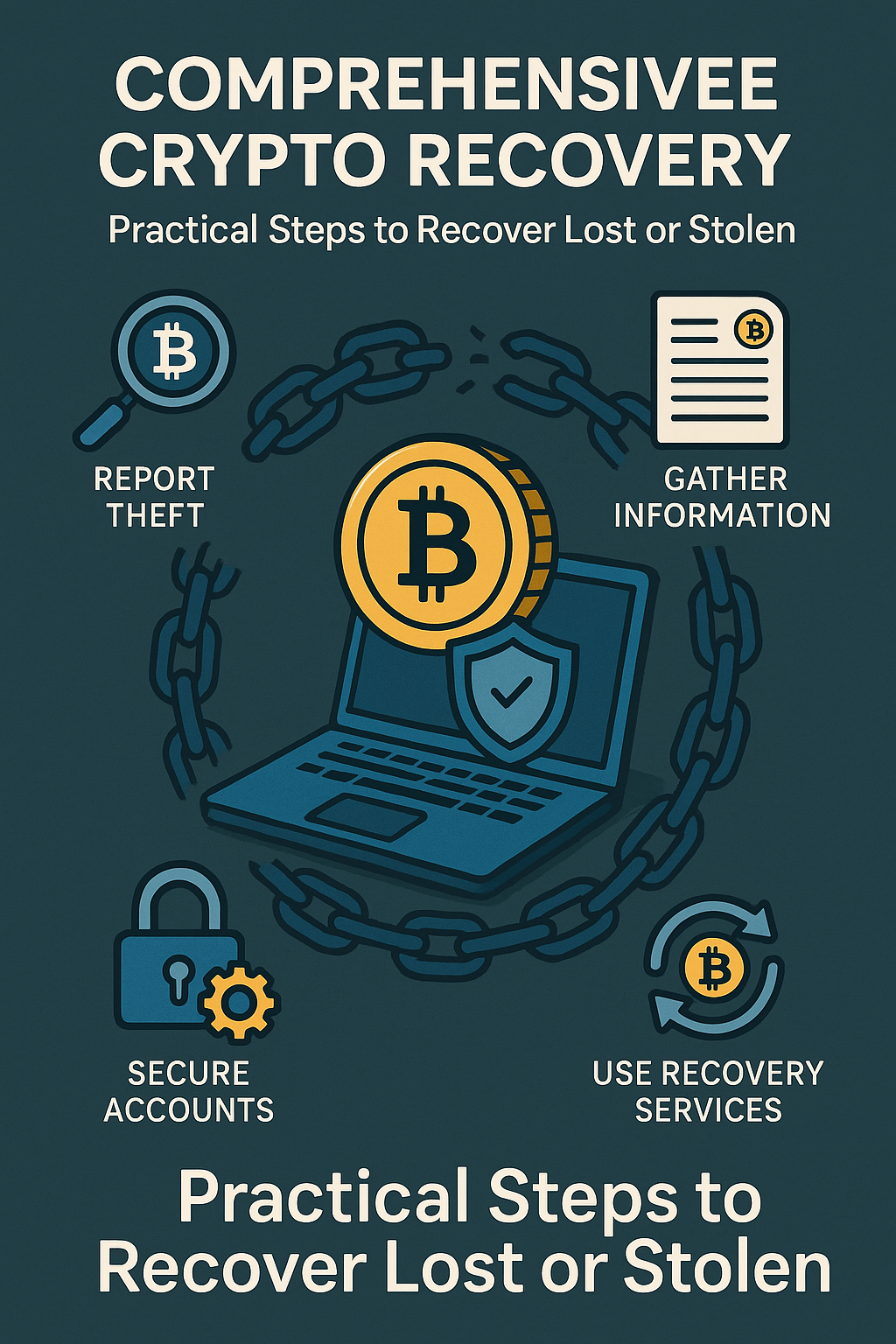

Crypto recovery services combine technical repair, investigative tracing, and legal coordination to help individuals and organizations try to recover lost or stolen digital assets. How successful a recovery will be depends on the type of loss, how quickly you report it, and whether transactions remain traceable on-chain. This guide walks through how crypto wallet recovery and blockchain forensics work, when recovery is realistic, and which immediate steps improve outcomes for lost Bitcoin, stolen tokens, or corrupted wallet files. You’ll get clear triage steps for the first 24–72 hours, learn how self-custody differs from custodial incidents, and find practical checks to verify legitimate recovery providers. Throughout, key terms like crypto wallet recovery, seed phrase recovery, blockchain forensics, and recover stolen cryptocurrency are used to point you to actionable next steps and realistic expectations.
Professional recovery firms are meant to supplement DIY efforts by pairing technical recovery with tracing and legal outreach. They typically work on contingency (success-fee) or fixed-fee diagnostic models. During an initial assessment expect careful evidence documentation — and never a request for your full seed phrase or private keys. Choose providers who explain their process in plain language. This short overview sets expectations and leads into a closer look at how these services operate.
What Are Crypto Recovery Services and How Do They Work?

Crypto recovery services cover technical repair, credential recovery, blockchain tracing, and legal liaison to give stolen or lost assets the best chance of being retrieved. Typically, teams collect forensic artifacts (wallet files, txids, device logs), apply specialized tools to repair or recover access where lawful, and trace transaction flows to locate custodial endpoints or exchange accounts where intervention is possible. The real value is the combination of skills—data recovery, blockchain analytics, and legal outreach—which usually yields better results than ad hoc DIY attempts. Knowing these core phases helps you prepare the right inputs and understand why speed matters for tracing and exchange cooperation.
Crypto recovery usually follows four core phases:
- Assessment and evidence capture: Record wallet files, transaction hashes, device state, and timestamps to preserve integrity.
- Technical recovery: Try password recovery, file repair, or device repair without exposing seed phrases.
- Blockchain tracing: Map transaction graphs, tag addresses, and identify possible custodial checkpoints.
- Legal and exchange liaison: Prepare reports for exchanges and law enforcement to request freezes or account holds.
Each phase enables the next. Fast, careful evidence handling improves the chances of a positive outcome.
Different recovery service types ask for different inputs and work on different timelines. The table below compares common service categories, required artifacts, and likely results to help you choose the right path.
The table gives a quick view of service types and typical outcomes so you know what to expect before engaging a provider.
| Service Type | Typical Inputs Required | Typical Outcome / Timeframe |
|---|---|---|
| Password & keystore recovery | wallet.dat, keystore JSON, password hints | Possible partial or full access if credentials are recovered; timeline: days–weeks |
| Seed phrase reconstruction | partial mnemonic words, family hints, passphrase info | Reconstruction may be possible when only a few words are missing; timeline: weeks–months |
| Hardware wallet repair | failed device, device logs, purchase proof | Device-level repair can restore access in some cases; timelines vary |
| Blockchain tracing & exchange liaison | txids, addresses, timestamps | Identification of custodial accounts; potential freeze if reported quickly (days–weeks) |
This comparison shows that each service has its own inputs and realistic timelines — collect the right evidence before escalating to professionals.
What Types of Crypto Losses Can Be Recovered?
Crypto losses fall into distinct categories with different recoverability prospects: self-custody access loss (forgotten passwords, misplaced seed phrases), software or file corruption, hardware failures, phishing or theft, and custodial exchange incidents such as account compromise or insolvency. Recoverability is highest when you control the private keys or when stolen funds can be traced to custodial endpoints. Recoverability drops when mixers, privacy coins, or cross-chain bridges are in use. Because time is critical, reporting early increases the chance exchanges will cooperate and may allow freezes that preserve funds for recovery. Knowing these categories helps you prioritize which evidence to preserve and which recovery methods apply.
Short examples make the differences clear: a forgotten password with an intact keystore is often easier to fix than a completely lost seed phrase; a stolen Bitcoin routed to a centralized exchange can sometimes be frozen if traced promptly. These contrasts explain why immediate, evidence-focused triage matters next.
What Is the Typical Crypto Recovery Process?
Most recoveries start with an intake that documents the incident, collects forensic artifacts (wallet files, device images, txids), and creates a verified chain-of-custody. Technicians then attempt non-destructive technical recovery—GPU-accelerated password-cracking or file repair—while investigators run blockchain analytics to map transaction flows and flag potential custodial endpoints. If tracing finds custodial control, teams prepare reports for exchanges and law enforcement to request holds or subpoenas; in parallel, civil legal remedies may be considered when appropriate. Clear, honest reporting about probabilities and timelines is important so clients understand realistic expectations.
This workflow — intake, technical recovery, tracing, and legal coordination — provides a clear path from preserving evidence to seeking asset retrieval. The next section covers hands-on wallet-access recovery steps you can start right away.
How Can You Recover Lost Access to Your Crypto Wallet?
Recovering wallet access depends on wallet type, what artifacts you still have, and the failure’s cause. Proper triage and the right tools can often restore access without exposing private keys. Immediate actions — making forensic copies, stopping further transactions, and documenting details — preserve both DIY and professional options. Technical choices range from targeted password-recovery tools for software wallets to partial-seed reconstruction or hardware repair for offline devices. Knowing when to escalate to a specialist matters as much as the initial triage steps.
Start with these immediate do/don’t actions to preserve evidence and improve recovery odds:
- Do create a verified forensic copy of wallet files and device images; avoid risky password guessing on originals.
- Do log transaction IDs, approximate timestamps, and any communications with services.
- Don’t share your full seed phrase, private key, or unencrypted wallet file with anyone.
- Don’t keep using compromised devices or accounts that could overwrite important logs.
Following these steps preserves critical data for later password attempts or forensic analysis. The subsections that follow cover password recovery and seed/hardware options in more detail.
Different wallet types need different recovery approaches. The table below matches wallet categories to common failure modes and likely recovery options so you can pick the right next step.
This table helps you match your wallet type to realistic recovery paths.
| Wallet Type | Common Failure Mode | Recovery Options |
|---|---|---|
| Software wallet (desktop/mobile) | Forgotten password, corrupted file | Password cracking using the wallet file + GPU tools; file repair; restore from local backups |
| Hardware wallet | Device damage, firmware fault, lost PIN | Device repair or manufacturer diagnostics (without sharing seed); hardware-assisted extraction in extreme, authorized cases |
| Custodial exchange account | Account compromise, credential theft | Account recovery via exchange compliance, KYC evidence, and law enforcement requests |
| Paper or written seed | Lost, partially damaged | Partial-seed reconstruction, manual word checking with pattern analysis |
How Do You Recover Forgotten Crypto Wallet Passwords?
Password recovery usually relies on known-good wallet files and any password hints you can provide. Specialists use targeted cracking with GPU-accelerated tools, dictionary attacks, or rule-based permutations tuned to your hint set. Success depends on the password’s strength, the wallet’s encryption scheme, and whether hardware-backed encryption is used. For safety, never upload raw wallet files to unvetted public services; prefer offline, local tools or vetted providers who handle files securely. If DIY attempts fail or risk exposure, consult a reputable recovery firm that documents its process and never asks for your full seed phrase.
That background sets realistic expectations and leads into seed phrase and hardware wallet recovery options next.
What Are the Options for Lost Seed Phrase and Hardware Wallet Recovery?
Seed-phrase recovery ranges from simple fixes—using a remembered subset of words or digital backups—to advanced reconstruction methods that use statistical models and wordlist pruning when only a few words are missing. The fewer the missing words, the higher the chance of success and the faster the recovery; if many words are unknown, probability drops and compute time rises sharply. For damaged or bricked hardware wallets, professional repair labs can sometimes recover device internals or extract encrypted seeds under strict legal and ethical controls. Never disclose your entire seed phrase to unverified parties; instead, share metadata or partial information that helps specialists without compromising security.
These reconstruction and repair options illustrate the trade-offs between DIY work and professional intervention. Next, we’ll look at tracing stolen funds and forensic techniques.
How Do Crypto Recovery Services Help Recover Stolen Cryptocurrency?
When funds are stolen, recovery teams combine on-chain analytics with exchange outreach and legal channels to try to retrieve assets. Forensics maps transaction graphs and uses clustering to link addresses to known entities, enabling targeted requests to platforms that may freeze funds. Challenges arise when mixers, privacy coins, or cross-chain bridges are used, but quick reporting and coordinated exchange cooperation can still produce meaningful results. Supplying clear documentation — txids, timestamps, and details on phishing vectors — speeds up tracing and legal escalation.
Common forensic techniques used to trace stolen assets include:
- Transaction graph analysis: Follow flows across addresses to visualize movement.
- Address clustering & tagging: Group addresses likely controlled by the same actor and link them to known exchange deposits.
- Exchange liaison & subpoenas: Present traced evidence to exchanges to request account freezes or disclosures.
These methods create a pathway to locate custodial endpoints and build cases for lawful action. The table below clarifies tools and expected results.
| Forensic Technique | Tool / Method | Typical Result |
|---|---|---|
| Transaction graph analysis | Blockchain explorers, analytics platforms | Visualized flow and identification of intermediary addresses |
| Clustering & tagging | Heuristic clustering, OSINT | Attributed address groups with likely exchange links |
| Exchange takedown coordination | Legal requests, compliance outreach | Possible account freeze or funds recovery if the exchange cooperates |
| Cross-chain tracing | Bridge logs, on-chain relayer analysis | Partial mapping of flows; added complexity and longer timelines |
Understanding these methods shows how technical tracing supports legal actions and exchange cooperation. The next section covers reporting and legal routes you can use worldwide.
How Does Blockchain Forensics Trace Stolen Crypto Assets?
Blockchain forensics traces assets by following UTXO or account-model flows, building transaction graphs that reveal intermediary addresses and mixing patterns, and applying heuristics to cluster addresses under common control. Analysts enrich on-chain data with exchange deposit tags, darknet marketplace indicators, and OSINT to prioritize likely custodial endpoints. Tracing works best on transparent chains like Bitcoin and Ethereum; privacy techniques such as CoinJoin or privacy coins make attribution harder and often require deeper investigative resources. Analysts package trace results into actionable reports that exchanges or law enforcement can use to request holds or disclosures.
This overview highlights both the power and the limits of tracing, which leads naturally into the legal and reporting pathways that can act on forensic findings.
Analysis of the Bitcoin Transaction Network for Blockchain Forensics This paper introduces a Bitcoin transaction network analysis method designed to support future blockchain forensic investigations. The approach analyzes the Bitcoin transaction graph to scrutinize Bitcoin flow and surface useful forensic features. A bitcoin transaction network analytic method for future blockchain forensic investigation, L Liu, 2020
What Legal Recourse and Reporting Options Are Available for Crypto Theft?
If you’ve been a victim of crypto theft, report the incident to local police and national cybercrime units, and file reports with specialized portals like FBI IC3 or Europol where applicable. Provide a clear evidence package with txids, screenshots, and a timeline. Legal remedies may include civil claims against identifiable defendants, coordinated seizure requests in permissive jurisdictions, or formal subpoenas and mutual legal assistance where exchanges are involved. Early reporting increases the chance of preserving assets through exchange freezes, but legal processes can be slow and outcomes vary by jurisdiction. Preparing concise evidence packets reduces friction when authorities or platforms request documentation.
Fast reporting and well-organized evidence are critical. The next major section explains how to vet recovery firms so you don’t add risk during this sensitive phase.
How Can You Identify Legitimate Crypto Recovery Services and Avoid Scams?
Vetting legitimate recovery providers should be practical and evidence-focused: confirm they never ask for your full seed phrase, review fee structures (avoid firms demanding large upfront payments), request anonymized case studies or references, and insist on written terms that explain confidentiality and scope. Positive signs include transparent processes, success-fee or diagnostic-first options, and a track record of working with law enforcement and exchanges. Because scams increase during high-stress incidents, a short verification routine helps you separate reputable specialists from predatory operators before you commit.
Look out for these common red flags that signal fraudulent recovery offers:
- Requests for full seed phrase or private keys: Any provider demanding these is asking for direct access to your funds.
- Guaranteed 100% recovery promises or pressure for large upfront payments: Recovery outcomes are probabilistic and depend on many variables.
- Unverifiable claims or no documented process: Legitimate firms provide process summaries and anonymized references.
If you spot these red flags, stop contact immediately and report the approach to authorities. The next subsection lists positive verification traits to ask for.
Use this verification checklist to compare providers quickly and request specific documents before engagement.
| Verification Item | What to Ask For | Why It Matters |
|---|---|---|
| Process description | Written intake and evidence-handling steps | Shows procedural rigor and how your data will be protected |
| Fee structure | No-upfront or success-based options, written estimates | Aligns incentives and reduces the risk of predatory billing |
| Case studies or references | Anonymized recovery summaries | Demonstrates past experience without exposing client privacy |
| Law enforcement cooperation | History of exchange liaison or official reports | Indicates ability to operate with authorities when needed |
This checklist gives concrete prompts to request from any prospective provider. Next, we’ll cover prevention so you can reduce the need for recovery services altogether.
What Are the Common Red Flags of Crypto Recovery Scams?
Scammers prey on urgency and fear: they promise instant guarantees, ask for seed phrases or remote access, and push for upfront payments with high-pressure tactics. They may show fake screenshots, invent success stories, or avoid clear contracts and privacy commitments. Spotting these patterns — especially requests for your full mnemonic or authorizing transfers — should lead you to stop communication and preserve evidence for law enforcement. When unsure, consult independent sources and favor providers who accept non-destructive diagnostics first.
Recognizing these red flags helps you avoid making a bad situation worse. The next subsection explains what legitimate companies should provide instead.
Graph Visualization for Bitcoin Transaction Analysis and Forensic Investigation Graph-based visualization techniques help analyze blockchain transactions for link prediction, node classification, and forensic investigation of entity relationships within the Bitcoin network. Graph based visualisation techniques for analysis of blockchain transactions, JS Tharani, 2021
What Should You Look for in the Best Crypto Recovery Companies?
Top recovery firms offer clear written intake protocols, strict privacy and evidence-handling standards, honest communication about probabilistic outcomes (no guarantees), and fee models that avoid excessive upfront charges. They can share anonymized case studies, explain their technical tooling and forensic approach, and demonstrate past coordination with exchanges or law enforcement. Ask for a sample engagement agreement so you understand timelines, deliverables, and data protections before you commit.
Those verification steps complete the provider-vetting picture. The next section focuses on preventive practices to reduce future recovery needs.
What Are the Best Practices to Prevent Crypto Loss and Minimize Recovery Needs?
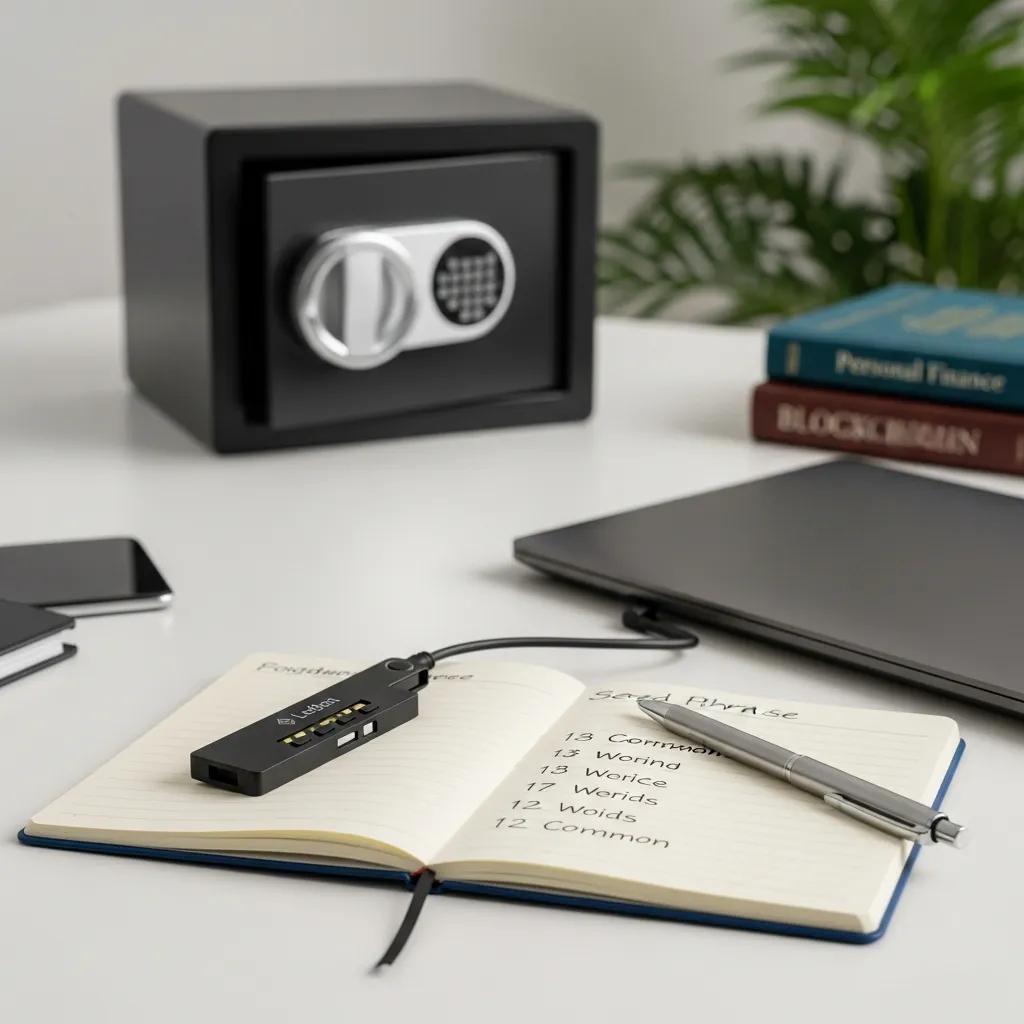
Prevention is the most reliable strategy. Store seed phrases in air-gapped, tamper-resistant formats (stamped metal or split-shares), use hardware wallets for long-term holdings, consider multi-signature setups for shared custody, and maintain strong device hygiene plus 2FA on custodial accounts. Regularly audit your recovery plans and keep encrypted backups of keystore files. Combining procedural safeguards with technical controls reduces the chance of unauthorized access or accidental loss and makes any necessary recovery much simpler.
Here are actionable best practices to implement today to protect your assets and avoid recovery scenarios.
- Use hardware wallets for self-custody and keep seed phrases offline on durable media.
- Use multi-signature arrangements for larger holdings or shared accounts.
- Choose strong, unique passwords, enable 2FA (prefer authenticator apps or hardware keys), and watch for phishing.
Adopting these controls reduces your attack surface and makes recovery, if needed, more straightforward. The next subsection gives implementation details for MFA and seed storage.
How Can You Secure Your Crypto Wallet with Multi-Factor Authentication and Safe Seed Phrase Storage?
Enable multi-factor authentication on all custodial accounts using authenticator apps or hardware security keys rather than SMS where possible. Keep your hardware wallet PIN and passphrase separate from your seed and memorize sensitive codes instead of storing them near the seed. For seed storage, use durable media (stamped metal plates) and consider geographically distributed copies or a multi-signature backup to avoid single-point failures. Balance accessibility and redundancy: have enough copies to survive loss but avoid digitizing full-seed backups that increase exposure risk. These steps reduce the chance of theft or accidental loss.
Practical seed storage and MFA measures provide durable protection and lead naturally into spotting and reacting to scams, which the following subsection covers.
How Do You Identify and Avoid Common Crypto Scams and Fraud?
Detect phishing by checking URLs and sender addresses carefully, avoid unsolicited investment offers, and be wary of social-engineering attempts like impersonations of exchange staff. If you suspect compromise and still control the keys, move funds to a safe wallet immediately. If you don’t control the keys, preserve evidence (screenshots, txids, timestamps) and freeze custodial accounts through the platform. Report scams to law enforcement and specialized portals, and keep logs and communications to support any investigation. Swift, measured actions limit damage and make it easier for investigators to help.
Demystifying Bitcoin Fraudulent Transactions and Illicit Nodes for Financial Forensics This paper explores methods to uncover fraudulent transactions and illicit nodes in the Bitcoin network using graph-derived features from address-transaction graphs to detect suspicious activity. Demystifying fraudulent transactions and illicit nodes in the bitcoin network for financial forensics, Y Elmougy, 2023
How Do You Recover Cryptocurrency from Specific Assets and Platforms?
Recovery depends on the asset and platform because UTXO-based chains like Bitcoin differ from account-model chains like Ethereum, and centralized exchanges follow their own freeze and compliance processes. For Bitcoin, UTXO tracing and careful wallet file handling are central. For Ethereum and ERC-20 tokens, contract approvals, token allowances, and DeFi interactions add complexity. Understanding these differences helps shape both forensic tracing and technical recovery strategies. The next subsections offer stepwise guidance for Bitcoin and Ethereum scenarios.
Use this checklist for lost Bitcoin recovery and the forensic steps to follow.
- Preserve wallet files and create a forensic copy of any device that held keys.
- Collect txids and timestamps for outgoing UTXOs, plus records of any suspicious deposits or withdrawals.
- Run UTXO-chain analysis to map spent and unspent outputs and spot possible custodial deposits.
These steps focus your Bitcoin-specific response. The next subsection explains typical Bitcoin recovery mechanics.
What Are the Steps for Lost Bitcoin Recovery?
Lost Bitcoin recovery centers on careful handling of wallet.dat/keystores, UTXO tracing, and leveraging exchange cooperation when funds land in custodial services. Start by making exact forensic copies of wallet files and device images, then attempt controlled password recovery or file repair using local tools and conservative rules based on your password hints. If tracing shows funds moved to an exchange, prioritize identifying the first custodial endpoint and prepare a clear evidence package for that platform to request a freeze. Because Bitcoin’s UTXO model records immutable inputs and outputs, careful chain analysis often yields actionable leads when reported early.
These Bitcoin-specific tactics show how technical recovery and tracing fit together. Next we cover the added complexity of Ethereum and ERC-20 tokens.
How Is Ethereum and ERC-20 Token Recovery Different?
Ethereum’s account model and smart-contract interactions create extra layers: tokens can be approved to contracts, moved through DeFi protocols, wrapped, or bridged across chains. Tracing requires examining contract events, token transfer logs, and allowance approvals; recovery teams may need to coordinate with protocol developers or centralized platforms that custody wrapped assets. Because token recoverability often depends on exchange cooperation or smart-contract intervention, investigations focus as much on off-chain custody points as on pure on-chain flows.
Understanding these contract- and token-level nuances rounds out the platform-specific guidance and points to verified assistance when needed.
Frequently Asked Questions
What should I do immediately after losing access to my cryptocurrency?
Stop any further transactions if possible to prevent more loss. Make a verified forensic copy of wallet files and any device images to preserve evidence. Record transaction IDs, timestamps, and relevant communications. This information is critical whether you try a DIY recovery or hire a professional. Act quickly — early steps improve your chances.
How can I differentiate between legitimate and fraudulent recovery services?
Legitimate firms will never ask for your full seed phrase or private keys. Look for clear fee structures (ideally success-based), written terms, and anonymized case studies or references. Be cautious of anyone promising guaranteed recoveries or pressuring you for large upfront payments — those are common scam signs.
What are the potential costs associated with crypto recovery services?
Costs vary by complexity and provider. Some firms charge contingency fees (paid only on success); others bill for diagnostics or fixed services. Clarify the pricing model before engaging and avoid providers demanding large upfront fees without a transparent scope of work.
Can I recover stolen cryptocurrency if it was sent to a decentralized exchange?
Recovery from a decentralized exchange (DEX) is much harder than from a centralized exchange because DEXs don’t hold user funds centrally and typically can’t freeze transactions. If you can trace the flow and identify addresses involved, legal action or reporting may still help. A specialist in blockchain forensics can increase your chances by building a strong evidence package.
What role does blockchain forensics play in cryptocurrency recovery?
Blockchain forensics analyzes transaction data to trace the movement of stolen or lost assets. Techniques like transaction graph analysis and address clustering help identify custodial endpoints and possible recovery paths. These findings form the evidence exchanges or law enforcement need to act.
How can I protect myself from future cryptocurrency losses?
Use hardware wallets for long-term storage and keep seed phrases on tamper-resistant media. Enable multi-factor authentication, perform regular security audits, and stay aware of phishing tactics. Combining technical controls with solid procedures dramatically lowers your risk.
What should I do if I suspect my cryptocurrency has been stolen?
Act fast: collect txids, timestamps, and related communications, report the theft to local police and cybercrime units, and alert any exchanges involved with your evidence. Engaging a professional recovery service can help with tracing and pursuing recovery options.
Conclusion
Recovering lost or stolen cryptocurrency is complex and requires a mix of technical skill, forensic analysis, and legal coordination to maximize the chance of success. Acting quickly, preserving clear evidence, and choosing vetted professionals when needed will improve outcomes. If you need help, consider working with reputable recovery services that follow strong evidence-handling and disclosure practices. Take proactive steps now to protect your digital assets and reduce the need for recovery in the future.
If you have been impacted by crypto fraud, contact Digital Defenders Group for assistance.
No responses yet