If you have been impacted by crypto fraud, contact Digital Defenders Group for assistance.

Cryptocurrency scams are deliberate schemes that steal money or personal data from crypto holders by exploiting technical gaps, social engineering, or false profit promises. This guide shows you how to recognize the most common fraud types, spot clear red flags, lock down wallets and exchange accounts, and act quickly if you’re targeted. Stopping scams matters because blockchain transfers can’t be undone, and attackers move funds fast — so early detection and strong operational security cut losses and improve recovery odds. You’ll find concise prevention checklists, side‑by‑side security comparisons, a prioritized incident response sequence, and a practical overview of legal and forensic options. We cover six core areas: scam mechanics, red‑flag detection, wallet and exchange hygiene, urgent post‑scam steps, legal support for recovery, and emerging AI and regulatory threats in 2025 — all with a practical, no‑nonsense focus on preventing crypto scams, preserving evidence, and improving outcomes.
What Are the Most Common Types of Crypto Scams and How Do They Work?
Crypto scams use a handful of repeatable tactics where attackers turn trust or technical complexity into theft — through persuasion, fake infrastructure, or on‑chain obfuscation. Learn the common playbooks: investment schemes that promise guaranteed returns to draw deposits, phishing and impersonation attacks that harvest credentials, and rug pulls or pig‑butchering cons that manipulate price or relationships to drain funds. Knowing the typical recruitment channels, how funds move, and cash‑out routes helps you assess risk before sending money and preserves evidence when you report. The table below summarizes major scam types, how they operate, and the usual red flags so you can scan offers quickly and compare threats.
| Scam Type | How It Works | Typical Victim Impact / Red Flags |
|---|---|---|
| Investment scams (crypto) | Operators invent tokens or Ponzi structures, promise high guaranteed yields, and amplify deposits with referral rewards and fake performance data. | Price pump-and-dump, anonymous or unverifiable teams, forged audits or badges, and pressure to recruit others. |
| Romance scams (crypto) | Scammers build emotional rapport over time, then ask for crypto as a “safe” gift or investment, often citing fake emergencies. | Emotional pressure, requests for off‑platform transfers, avoidance of video or in‑person contact. |
| Phishing scams (crypto) | Attackers spoof wallets, exchanges, or emails to capture seed phrases, private keys, or login details and then drain accounts. | Suspicious domains, unexpected links, sudden auth prompts, and reused credentials. |
| Rug pulls | Project teams mint tokens, list them, then remove liquidity or abandon the project to collapse price and block withdrawals. | Liquidity suddenly removed, false “locked liquidity” claims, anonymous developers, and sharp price crashes. |
| Pig butchering scams | Long cons where victims are groomed into ever‑larger investments and then robbed after elaborate manipulation and laundering. | Extended grooming, early staged returns, withdrawal delays, and coordinated laundering patterns. |
This side‑by‑side view highlights differences and shared indicators across scams. With these patterns in mind, the next section outlines precise warning signs and verification steps to use before you interact with any crypto offer.
CryptoScams: Identifying and Avoiding Red Flags This piece reviews how widespread crypto scams operate and why spotting red flags matters. It contrasts new attack methods with older Web‑2 scams and stresses that even experienced people get tricked. The article’s goal is practical education: the common scam types and the warning signs to watch for. Crypto Scams: Don’t Ignore the Red Flags, 2022
What Are Investment Scams and How Can You Recognize Them?

Investment scams in crypto typically show up as too‑good‑to‑be‑true opportunities that hide downside risk behind polished dashboards, fake endorsements, or fabricated performance charts. Scammers often present plausible tokenomics while keeping developer identities hidden and may counterfeit audit badges or reuse real audit firm logos. A practical checklist: verify on‑chain token distribution, confirm developer activity in source repos, review independent audits, and test liquidity and withdrawals with a small amount first. These steps lower your exposure to Ponzi mechanics and are part of basic due diligence that protects your capital and data.
How Do Romance and Phishing Scams Target Crypto Users?
Romance and phishing scams exploit trust and technical unfamiliarity by combining relationship building with crafted requests for crypto or credentials. Romance scammers escalate from friendly conversation to urgent financial pleas, while phishing attacks use urgency and spoofed interfaces to trick victims into revealing seed phrases or clicking malicious links. Protect yourself by insisting on multi‑channel verification (live video and known contact points), never sharing seed phrases or private keys, and treating unsolicited “investment help” as suspicious. These social‑engineering patterns show why operational security must pair technical safeguards with healthy interpersonal skepticism.
How Can You Identify Crypto Scam Red Flags to Prevent Fraud?
Spotting red flags early is one of the highest‑value prevention activities: it prevents irreversible loss and preserves evidence for recovery. Red flags mix behavioral cues (pressure, secrecy), technical signs (fake audits, odd tokenomics), and on‑chain indicators (concentrated holdings, rapid liquidity drains). Before moving funds, run quick checks — verify the team, review contract code, test liquidity, and read community sentiment. The short checklist below gives the most actionable warning signs you can use as a pre‑transaction routine.
The most actionable red flags include:
- Urgent pressure to act: Limited‑time pitches are designed to shortcut due diligence and force hasty transfers.
- Unverifiable team or fake audits: No clear developer identities or audit reports that can’t be confirmed are a major warning.
- Requests for seed phrases or private keys: Legitimate services never ask for your seed phrase or private key.
- Odd tokenomics or blocked withdrawals: Sudden withdrawal failures or opaque liquidity pools often precede rug pulls.
- Off‑platform escrow or private wallet requests: Moving funds through private addresses or unusual channels is frequently fraudulent.
What Warning Signs Indicate a Potential Crypto Scam?
Warning signs blend human behavior with measurable on‑chain anomalies. Qualitative signals include impossible returns, secrecy about team members, unsolicited offers, and emotional manipulation. Quantitative signals include skewed token distribution, abrupt liquidity shifts, and dormant developer repos. A solid vetting routine tests both sides: check official documentation and community history, inspect smart contract code or audit artifacts, and validate liquidity with micro‑transactions. These layered checks reduce false positives and guide safer decisions before you transfer funds.
Detecting CryptocurrencyScams: Machine Learning Analysis of Patterns This paper analyzes scam detection in the U.S. using machine‑learning to identify behavioral and transactional patterns. It reviews current detection methods and argues for updated techniques to spot emerging scams, outlining data‑driven red flags and detection signals. Detecting Cryptocurrency Scams in the USA: A Machine Learning-Based Analysis of Scam Patterns and Behaviors, BC Das, 2025
How to Spot Fake Exchanges and Impersonation Attempts?
Fake exchanges and impersonation attacks clone real platforms to steal credentials or lure deposits. Start with domain and certificate checks: look for subtle typos, homograph tricks, and mismatched SSL organization details. Cross‑verify apps in official stores and confirm announcements through verified channels. Watch for inconsistent branding, poor grammar in UI copy, or fee structures that don’t match reputable platforms. Pair these checks with calls or messages to official support channels — and never follow links received in unsolicited messages without verifying their origin.
What Are the Best Practices for Secure Crypto Wallet and Exchange Management?
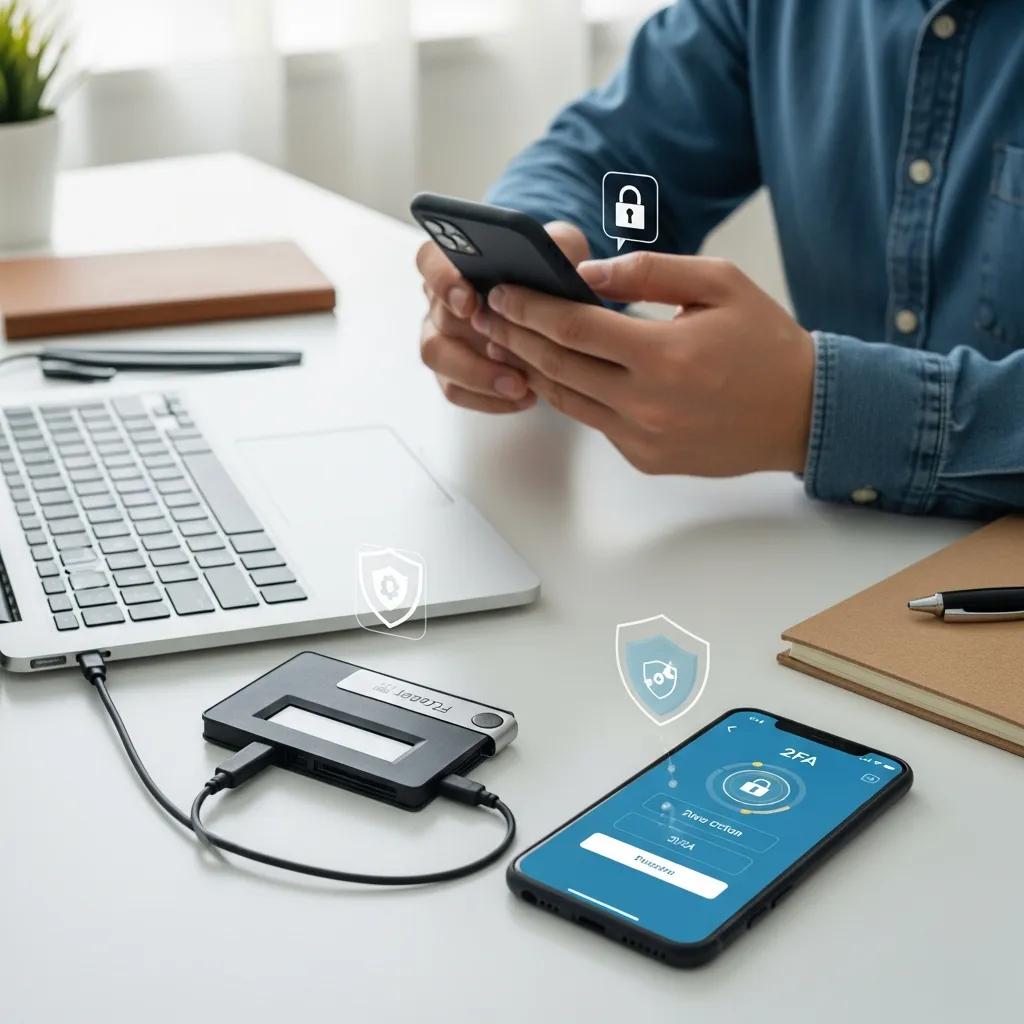
Good wallet and exchange management shrinks your attack surface by combining strong authentication, custody choices that match your risk, and routine monitoring to catch anomalies early. Best practices include using hardware wallets for long‑term, non‑custodial holdings; preferring time‑based 2FA (TOTP) over SMS; segmenting funds by purpose; and keeping encrypted, offline backups of recovery phrases. The table below compares common security measures, what they protect, and simple implementation tips so you can pick the right mix for your profile.
| Security Measure | What It Protects | How to Implement |
|---|---|---|
| Hardware wallets | Private key theft | Use a reputable device, keep the seed phrase offline, and split backups across secure locations |
| Two-factor authentication (TOTP) | Account takeover | Enable authenticator apps for exchanges and services; avoid SMS where possible |
| Custodial vs non-custodial custody | Custody and access risk | Store major holdings in hardware wallets and keep operational balances on regulated exchanges with strong KYC/AML |
| Secure backups | Recovery from loss or device failure | Use encrypted backups and metal seed storage; do not keep plain text seeds in cloud sync |
This comparison helps you weigh convenience against security for different uses. The next section drills into specific choices like which 2FA solutions and hardware wallets to favor.
The following best practices give tactical steps to harden access:
- Use hardware wallets for long‑term holdings: Keep private keys offline to reduce remote compromise risk.
- Prefer TOTP‑based 2FA over SMS: Authenticator apps resist SIM‑swap attacks and are more secure than SMS codes.
- Segment funds by purpose: Use separate wallets for trading, savings, and everyday transactions to limit impact from a breach.
How Does Two-Factor Authentication and Hardware Wallet Use Enhance Security?
2FA and hardware wallets address different attack vectors: 2FA adds a second proof of identity for account access, while hardware wallets keep private keys offline and require physical confirmation for transactions. TOTP codes mean stolen credentials alone aren’t enough, and hardware devices protect keys even if the host computer is compromised. Combined with encrypted backups and careful device hygiene, these measures substantially lower theft risk and create clearer forensic traces if an incident occurs.
How to Verify Crypto Projects and Exchanges Before Investing?
Verification starts at the source and extends to on‑chain behavior: confirm team identities via verifiable profiles, read smart contract code or third‑party audits, inspect token distribution and liquidity on‑chain, and check community feedback across channels. Run small test deposits and withdrawals to validate platform behavior, and check reputational or regulatory records when possible. A reliable vetting flow — identity → code → on‑chain signals → operational tests — reduces the chance of engineered schemes and builds usable evidence for reporting if needed.
What Should You Do Immediately After Being Scammed in Crypto?
Fast, organized action after a scam preserves forensic traces and raises the chance of coordination with exchanges and law enforcement. Prioritize collecting and securing all evidence (transaction hashes, wallet addresses, messages), alert affected platforms to request freezes if possible, and file reports with appropriate authorities. Prompt action limits an attacker’s window to launder funds and enables forensic teams to trace flows while assets remain recoverable. The table below links each urgent action to why it matters and practical steps you can take under stress.
| Action | Why It Matters | Practical Steps / Contacts |
|---|---|---|
| Document transactions | Preserves immutable evidence for forensics and legal teams | Save transaction hashes, wallet addresses, timestamps, chat logs; export API logs and screenshots |
| Notify exchanges | May enable freezes or flags that slow laundering | Contact exchange support with evidence; request withdrawal holds and escalation |
| Report to law enforcement | Starts formal investigations and enables cross‑border cooperation | File a police report and submit to national fraud centers; include documented evidence and chain‑of‑custody notes |
The numbered checklist below is a compact, prioritized action sequence you can use immediately after discovering a loss.
- Stop further transfers: Stop any additional payments and disconnect linked devices to prevent repeat theft.
- Record all evidence: Save transaction hashes, wallet addresses, timestamps, chat logs, and any email headers or IP details.
- Notify platforms and exchanges: Contact support and request account holds or withdrawal monitoring with your evidence packet.
- Report to law enforcement and fraud centers: File formal reports with documented evidence to enable tracing and cross‑border assistance.
- Preserve device state and logs: Leave devices powered if advised and export logs to avoid losing volatile forensic data.
What Are the Essential Steps to Document and Report Crypto Fraud?
Good documentation and reporting depend on preserving both transactional and contextual evidence: chain‑of‑custody and verifiable on‑chain records are the backbone of recovery or legal actions. Capture transaction hashes, wallet addresses, UI screenshots, chat transcripts, email headers, and timestamps; export exchange account CSVs and keep original files in immutable formats where possible. Then deliver a tight evidence packet to exchange support and file police and national cybercrime reports. Timely, well‑organized reporting not only helps your case but also helps law enforcement disrupt broader attacker activity.
Blockchain and CryptoForensics: Investigating CryptocurrencyFrauds This study examines how blockchain forensics is applied to investigate crypto frauds. It highlights forensic techniques used to trace stolen funds and demonstrates how those methods support investigations and recovery efforts. Blockchain and crypto forensics: Investigating crypto frauds, U Agarwal, 2024
How Can You Seek Legal Assistance and Begin Asset Recovery?
When losses are large or laundering is complex, specialist legal help can coordinate forensic tracing, civil claims, and law‑enforcement engagement to pursue recovery. A legal intake typically evaluates jurisdictional options, the strength of on‑chain evidence, and possible civil remedies or subpoenas. Lawyers often work with blockchain forensics teams to map fund flows and identify intermediaries, then pursue litigation or preservation orders where appropriate. Contacting counsel early preserves evidence, aligns documentation with legal standards, and sets realistic expectations for timelines and likely outcomes.
How Does Legal Assistance Help Crypto Fraud Victims Recover Lost Assets?
Legal assistance combines case assessment, evidence gathering, blockchain analysis, and civil or regulatory steps to try to reclaim stolen assets. Attorneys translate on‑chain trails into legal exhibits, draft subpoenas or preservation requests for exchanges, and — when justified — file civil claims to obtain judgments and asset freezes. This approach tackles both the technical tracing of funds and the formal legal mechanisms needed to compel custodians or intermediaries to cooperate. Expect varied timelines and jurisdiction‑dependent results; recovery chances improve with quick action and thorough documentation.
What Services Does the Digital Defenders Group Provide for Crypto Scam Victims?
Digital Defenders Group, as described by Net Business International’s hub, provides tailored legal support for crypto scam victims including case evaluations, blockchain analysis, evidence collection, civil litigation, and asset recovery coordination. Their role is to assess facts, direct forensic tracing, and pursue legal avenues — subpoenas or civil claims — that can pressure custodians and service providers to cooperate. Contacting a specialized team makes sense when initial documentation shows traceable flows or when victims need help navigating jurisdictional or technical roadblocks. These services are escalation steps after immediate preservation and reporting are complete.
How Does Civil Litigation and Government Seizure Aid in Crypto Asset Recovery?
Civil litigation can produce court orders or judgments that identify wrongdoers and authorize remedies like asset freezes or turnover. Government seizure — when law enforcement secures warrants — can recover assets held by custodians. Litigation usually begins with case evaluation, evidence collection, and forensic mapping, then seeks injunctive relief or judgments that enable recovery. Law enforcement seizures require coordination among prosecutors, agencies, and forensic teams and depend on jurisdictional reach and custodian cooperation. Both paths complement each other: private suits pressure custodians, while criminal investigations can halt laundering when they advance.
What Are the Emerging Crypto Scam Threats and Regulatory Changes in 2025?
In 2025, threats center on AI‑enhanced social engineering, deepfake impersonation, and more advanced laundering through cross‑chain bridges and privacy tools. Attackers now create convincing synthetic voices or videos to coerce transfers and produce highly personalized phishing content. At the same time, regulators are tightening KYC/AML rules, improving cross‑agency cooperation (FBI, DOJ, Europol, Interpol), and enforcing stricter exchange compliance — narrowing anonymity for bad actors but placing more operational duties on platforms and users. Staying current and adapting verification practices are essential defenses against these evolving risks.
Below are practical countermeasures you can use against AI and deepfake threats.
- Use multi‑channel confirmations for high‑value requests: Verify identity through separate authenticated channels, not just a single message or call.
- Require live, unpredictable verification: Ask for unrecordable, real‑time video challenges to reduce deepfake effectiveness.
- Cross‑check through official channels: Verify claims through institution‑controlled portals or support lines rather than relying on forwarded documents.
How Are AI and Deepfake Technologies Increasing Crypto Scam Risks?
AI and deepfakes let attackers synthesize audio and video, mass‑personalize phishing messages, and fabricate realistic documentation to deceive victims and intermediaries. The main danger is plausibility: fake “CEO” requests, bogus investor pitches, or staged withdrawal confirmations that look legitimate. Effective countermeasures include multi‑factor identity checks, unpredictable live challenge‑response, and conservative transfer policies that require documented approvals. Adding these steps into operational routines narrows the gap attackers exploit between appearance and authenticity.
What Regulatory Measures Are Being Enforced to Protect Crypto Users?
Regulators in 2025 are enforcing stronger KYC/AML requirements, improving cross‑border cooperation, and mandating reporting that increases traceability of suspicious flows while raising compliance costs for exchanges and custodians. These changes make laundering harder and increase the chance stolen funds touch regulated systems where subpoenas and seizures are possible. For users, this means less anonymity but better mechanisms for reporting, freezing, and reclaiming assets. Staying aligned with evolving KYC/AML guidance and cooperating with official reports boosts the effectiveness of both private recovery and law enforcement efforts.
Frequently Asked Questions
What steps can I take to protect my cryptocurrency investments from scams?
Start with basic due diligence: research projects and exchanges, verify team identities, look for independent audits, and read community feedback. Use hardware wallets for long‑term storage, enable TOTP 2FA on accounts, and regularly monitor activity. Be wary of unsolicited investment offers and learn common red flags so you can spot suspicious behavior early.
How can I recover my funds if I fall victim to a crypto scam?
If you’re scammed, act fast: document everything (transaction hashes, wallet addresses, communications), notify the exchange or platform to request a freeze, and report the case to law enforcement and national fraud centers. Legal help can coordinate forensic tracing and civil or regulatory steps for recovery — but early, well‑organized evidence is critical.
What role does blockchain forensics play in recovering lost assets?
Blockchain forensics traces the path stolen funds take on the ledger. Forensic analysts map transaction flows, identify intermediary addresses and exchange interactions, and produce evidence that legal teams and law enforcement can use to pursue seizures or civil remedies. Forensics is a key part of any recovery effort.
Are there specific legal avenues available for victims of cryptocurrency fraud?
Yes. Victims can file police reports and complaints with national fraud centers and may pursue civil litigation to seek damages or asset recovery. Specialized lawyers help navigate jurisdictional hurdles, draft subpoenas, and coordinate with exchanges and forensic teams. Legal counsel clarifies options and next steps based on your situation.
What are the latest trends in cryptocurrency scams to watch out for?
Watch for AI‑driven social engineering and deepfake impersonation, more sophisticated laundering through cross‑chain bridges and privacy tools, and increasingly realistic phishing content. Staying informed and tightening verification practices are the best defenses against evolving scam tactics.
How can I verify the legitimacy of a cryptocurrency project or exchange?
Check the team’s credentials and public track record, look for independent audits, review on‑chain token distribution and liquidity, and perform small test transactions to confirm deposit and withdrawal behavior. Cross‑reference reputable sources and community feedback before committing funds.
What should I do if I suspect a scam but haven’t lost any money yet?
If you suspect a scam but haven’t sent funds, stop interactions immediately and document all communications. Research the project thoroughly and report suspicious activity to platforms or authorities to help prevent others from falling victim. Sharing your findings with the community can also warn and protect others.
Conclusion
Avoiding cryptocurrency scams comes down to clear patterns, disciplined verification, and quick action when something looks off. By learning common fraud types, applying wallet and exchange best practices, and preserving evidence when incidents occur, you can greatly reduce your risk and improve recovery chances. Start using the checklists and verification steps here today — they’re practical, proven steps to keep your digital assets safer.
If you have been impacted by crypto fraud, contact Digital Defenders Group for assistance.
No responses yet