If you have been impacted by crypto fraud, contact Digital Defenders Group for assistance.

Fake crypto wallet screenshots are edited images designed to trick people by showing invented balances or transactions. Learning to spot them is one of the simplest ways to avoid losing funds. This guide lays out what these fakes look like, how scammers make and use them, and the exact steps you should take the moment you encounter one. Understanding these elements can help preserve evidence and limit harm.
You’ll get practical detection techniques—visual cues, metadata checks, and on-chain verification. The guide also summarizes legal remedies for victims, explains the role of blockchain forensics in tracing funds, and describes how specialized recovery teams operate across borders. Net Business International runs an information hub that supports victims and coordinates asset-recovery work through the Digital Defenders Group (DDG), which brings together legal, forensic, and multi-jurisdictional capabilities. Read on for clear checklists and comparison tables of common scam types.
Learn to detect, document, and pursue recovery when you see a suspicious wallet screenshot.
What Are Fake Crypto Wallet Screenshots and How Do They Work?
Fake crypto wallet screenshots impersonate real wallet interfaces to misrepresent balances, transactions, or confirmations. Scammers combine image editing and template generators with social engineering to create apparent proof of funds. They will change balance numbers, swap transaction IDs, or alter timestamps. Spotting those falsified elements early prevents unnecessary transfers and preserves forensic evidence.
Understanding the common types of forged screenshots helps you choose the right verification method. The compact table below shows typical categories, how they’re created, and the indicators to watch for.
Knowing these categories helps you pick verification steps that challenge both the visual claim and the on-chain reality. The next section covers precise signal checks and fast verification tools you can use.
Different forgery types need different detection steps and carry different risks.
| Type of Forged Screenshot | Method Used | Key Indicators |
|---|---|---|
| Fake balance display | Edited image or template generator | Mismatched fonts, cut-off UI elements, improbable decimals |
| Fake transaction confirmation | Made-up TX ID or doctored explorer view | TX ID doesn’t resolve on-chain, conflicting timestamps |
| Phishing wallet screenshot | Cloned UI or spoofed extension view | Strange URL in captured bar, buttons or states that look off |
Knowing these categories helps you pick verification steps that challenge both the visual claim and the on-chain reality. The next section covers precise signal checks and fast verification tools you can use to confirm or debunk a screenshot.
What Is a Fake Crypto Wallet Screenshot?
A fake crypto wallet screenshot is an image deliberately altered to show false balances, invented transaction confirmations, or forged wallet addresses that imply money moved or exists. Scammers prey on UI elements that non-technical users treat as authoritative—balance fields, transaction hashes, timestamps, and address strings. The play is simple: tweak a few visible fields to create plausibility, then apply pressure or urgency so the target skips independent checks. For example, a screenshot that looks like a MetaMask balance can convince someone to pay an upfront “release” fee—until the claimed transaction hash can’t be found on any public explorer. Learning which visual elements are most commonly faked is your first line of defense.
How Do Scammers Use Fake Wallet Screenshots in Crypto Fraud?
Scammers weave fake wallet screenshots into larger social-engineering flows that rely on trust, urgency, and isolation to extract funds or data. In investment scams, screenshots act as “proof” of returns to induce more deposits; in romance fraud, they reassure a target that funds exist before asking for a loan; in marketplace scams, they’re used as fake receipts to trigger shipments. The common failure is that victims rarely get guided through independent verification, such as checking the transaction on a block explorer or confirming wallet addresses in a trusted channel. To resist these flows, insist on on-chain confirmation, request live proofs (a signed message or a broadcasted transaction), and never accept a static image as the only evidence. The next section lists the red flags and checks you can run immediately.
How Can You Identify a Fake Crypto Wallet or Scam Screenshot?
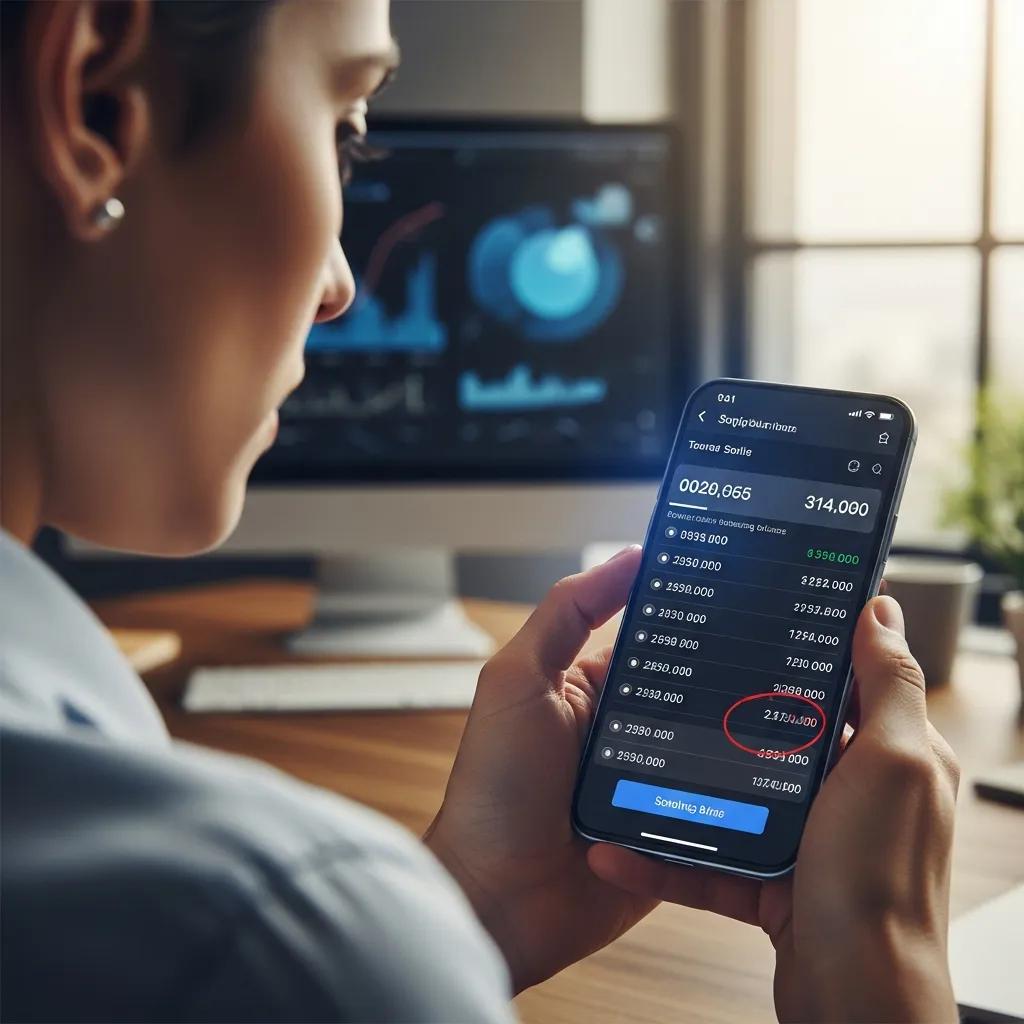
Identifying a fake screenshot combines quick visual triage, metadata inspection, and on-chain verification. Start by checking UI consistency, then validate any transaction IDs or addresses shown against public block explorers to confirm whether the transactions and balances actually exist. Simple checks—reverse image search, inspecting image metadata when available, and pasting TX IDs into trusted explorers—cut down the chance of falling for a fabricated claim. Below are the top red flags to scan rapidly before you engage further with the sender.
Common visual and technical signs you can triage quickly:
- Unresolved Transaction IDs: If the TX hash doesn’t resolve on a block explorer, treat the screenshot as suspect.
- UI Inconsistencies: Fonts, icons, or button placement that don’t match the genuine wallet suggest editing.
- Impossible Balances or Decimals: Odd decimal places or unrealistic numbers are classic manipulation signs.
- Mismatched Timestamps: Times that don’t align with the claimed timeline or with block timestamps are suspicious.
- Clipped or Pasted Areas: Uneven shading or cropped regions where elements were pasted indicate tampering.
- Reverse Image Matches: If the image appears elsewhere, it may be a reused template or a stock forgery.
After these quick checks, move to on-chain verification and evidence preservation—steps we detail next.
Below is a diagnostic table that links UI elements to common tamper signs and concrete verification actions.
| Visual Element | Tamper Sign | What to Check |
|---|---|---|
| Balance display | Strange formatting or decimals | Confirm token decimals and check the wallet balance directly on-chain |
| Transaction ID | Non-resolving TX or wrong network | Paste the TX into the correct explorer and confirm block and timestamp |
| Wallet address | Shortened, altered, or truncated string | Compare the address via trusted channels or check its on-chain history |
| Timestamp | Inconsistent or impossible time data | Cross-check with the block timestamp and the claimed event timeline |
Use this table as your first checklist when you receive a screenshot, then verify any transaction claims on-chain. The following section explains immediate steps to preserve evidence and limit further loss.
What Immediate Steps Should You Take After Encountering a Fake Crypto Wallet Screenshot?
When you encounter a suspicious wallet screenshot, focus on containment, evidence preservation, and verification so recovery options stay open. Stop any transfers and never share private keys or seed phrases. Capture the interaction—save the original image, export message logs, and note timestamps and sender handles. Then verify any claimed transactions on a trusted block explorer. These actions reduce additional harm and create a forensic trail useful for exchange takedowns, civil actions, or criminal reports. If the potential loss is significant, consider reaching out to specialized legal and forensic support; Net Business International’s information hub and the Digital Defenders Group (DDG) coordinate legal filings and forensic tracing across jurisdictions.
Follow these immediate actions in order to preserve options and begin recovery workflows.
- Stop Transfers Immediately: Halt any ongoing or planned transfers and disable automated payments to the counterparty.
- Preserve Communications: Export chats, save emails, and archive attachments or images in their original formats.
- Capture the Screenshot Context: Keep the original file, record timestamps, sender details, and the device or platform used.
- Verify On-Chain: Paste any provided TX hashes or addresses into a trusted explorer and save the results.
- Report and Seek Advice: Notify the wallet provider or exchange, file a police/cybercrime report, and consult legal counsel for large losses.
These steps form a clear, actionable sequence you can take now. The subsections that follow explain how to document evidence properly and where to report to preserve legal remedies.
Before listing reporting channels, the next section provides a structured checklist for evidence collection that supports both forensic analysis and legal claims.
How Do You Document and Preserve Evidence of a Fake Crypto Wallet Scam?

Good evidence collection balances breadth—capture everything—and attention to metadata that supports chain-of-custody. Save original image files, exported chat logs, sender account handles, timestamps, and any shown TX hashes or addresses. Where possible, preserve raw email headers or HTML that include sender metadata. Name files consistently (for example: YYYYMMDD_sender_channel_type) and store backups in write-protected or encrypted archives to prevent accidental changes. Clear, time-stamped documentation improves credibility with exchanges, investigators, and courts, and it helps forensic teams correlate off-chain communications with on-chain movements.
PhotoProof: Blockchain App for Verifying Image Authenticity Against AI Fakes Easy access to AI tools—deepfakes and GAN models—has made realistic image manipulation commonplace, undermining trust in photos. This report describes a decentralized iOS app that logs photo hashes and key metadata (time, location, device) on Ethereum, creating a tamper-resistant record. Users can later re-upload an image to verify its hash against the blockchain record, helping distinguish authentic photos from AI-generated fakes. PhotoProof: A Mobile Application for Verifying the Authenticity of Images, 2025
Where and How Should You Report Crypto Wallet Fraud?
Report suspected crypto wallet fraud to both the platforms involved and law enforcement for the best chance of action and recovery. Start with the wallet provider or exchange abuse team and supply your preserved evidence. Then file a formal complaint with local police cybercrime units and any national reporting bodies. For large or cross-border losses, escalate to specialized cyber units or national agencies to enable international cooperation. When you report, include a concise timeline, the preserved screenshot, exported messages, and any TX hashes so investigators and compliance teams can act quickly.
- Platform Abuse/Support: Submit your evidence and request transaction freezes or account holds where possible.
- Local Law Enforcement/Cyber Units: File an official report and keep the incident number for follow-up.
- National Cyber Reporting Bodies: Use centralized reporting portals that coordinate with international agencies.
Timely, structured reports increase the chance of exchange cooperation or government action. The next section outlines legal options when fraud causes loss and how specialist teams support recovery.
What Legal Options Are Available for Victims of Fake Crypto Wallet Scams?
Victims can pursue civil litigation, criminal reporting, and asset tracing—each path has different timelines, costs, and recovery prospects. Civil suits seek restitution or injunctions but require identifiable defendants and can face cross-border enforcement hurdles. Criminal complaints can prompt investigations and asset seizures but depend on prosecutorial priorities and international cooperation. Asset tracing combines blockchain forensics with legal process to follow funds through intermediary wallets and exchanges; this hybrid approach often underpins successful recoveries. The table below summarizes these remedies to help victims and advisors choose the most practical route for a specific case.
| Remedy | Typical Timeline | Practical Notes |
|---|---|---|
| Civil litigation | Months to years | Needs an identifiable defendant and enforceable judgment; discovery can compel exchange records |
| Criminal report & investigation | Variable; can be lengthy | May lead to seizures, but outcomes depend on agency resources and jurisdiction |
| Asset tracing & forensic cooperation | Weeks to months | Forensics maps fund flows; cooperation with exchanges speeds freezes and potential recovery |
Victims should weigh likely costs against recovery probability; specialized providers often combine the above approaches for the best practical outcome. The next subsection outlines how civil litigation typically proceeds in crypto cases.
How Does Civil Litigation Work in Crypto Scam Cases?
Civil litigation follows familiar stages—pleading, discovery, motions, and trial or settlement—but its evidentiary backbone is blockchain forensics and preserved digital records. Plaintiffs must allege facts that identify defendants or intermediary entities and seek remedies like restitution, injunctions, or turnover orders. Discovery targets account records, IP logs, and exchange cooperation to connect anonymous wallet addresses to real parties. Courts increasingly accept blockchain evidence, yet clear chain-of-custody and expert forensic reports improve admissibility. Cross-border enforcement often remains the main obstacle to actual recovery, so litigation should align with tracing and enforcement strategies that anticipate jurisdictional challenges.
Investigations into digital assets typically require specialist tools and expertise to trace illicit flows; blockchain forensics is central to that work.
Blockchain Forensics for Investigating Crypto Cybercrime Blockchain forensics: A practical approach to investigating cybercrime in the era of decentralisation. Blockchain forensics: A modern approach to investigating cybercrime in the age of decentralisation, S Salisu, 2023
What Role Does the Digital Defenders Group Play in Asset Recovery?
The Digital Defenders Group (DDG), via Net Business International’s information hub, coordinates blockchain forensics, legal filings, and cross-border engagement to pursue asset recovery in crypto fraud cases. DDG maps fund flows through wallets and exchanges, prepares targeted preservation orders, and liaises with authorities and exchange compliance teams to request holds on suspicious assets. Engaging a coordinated team early preserves evidence and increases practical recovery chances; DDG guides victims from initial documentation through forensic analysis and legal action while navigating cross-border enforcement limits. If you face a substantial loss, document your evidence and contact specialized recovery teams to evaluate options.
How Can You Prevent Falling Victim to Fake Crypto Wallet and Screenshot Scams?
Preventing these scams combines wallet security with verification habits that prioritize on-chain proof over static images. Use hardware wallets for significant holdings, enable two-factor authentication, and never share seed phrases or private keys. For transactions, verify destination addresses inside your wallet and confirm TX hashes on a trusted explorer instead of trusting images. Train contacts and staff to ask for live proofs—signed messages or real-time transaction broadcasts—and to treat unsolicited images as unverified until independently validated. These practices shrink the window for visual deception and blunt the effectiveness of screenshot-based scams.
- Use Hardware Wallets: Keep large balances in cold storage to reduce online exposure.
- Enable 2FA: Protect exchange and email accounts with two-factor authentication.
- Verify On-Chain: Confirm TX hashes and balances on a trusted explorer.
- Protect Seed Phrases: Never share seeds or private keys; store them offline and securely.
- Require Live Proofs: Ask for signed messages or live transaction broadcasts, not static images.
- Train Contacts: Educate family, staff, and partners on scam signals and response steps.
These layered precautions lower your risk from social engineering that relies on falsified images. The next section highlights wallet hardening tips and the growing threat from AI deepfakes.
What Are Best Practices for Securing Your Crypto Wallet?
Choose the right wallet for your needs and apply strong account hygiene across all linked services. Hardware wallets keep private keys offline and are the best option for long-term holdings; for frequent trading, use strong passwords, enable 2FA, and set account alerts on exchanges. Regularly review connected browser extensions, never paste seed phrases into unfamiliar apps, and use transaction pre-approval checks to confirm destinations and gas fees before signing. These safeguards reduce the chance that a fake screenshot or phishing prompt leads to a meaningful loss—and consistent habits make anomalies easier to spot.
How to Stay Alert Against Emerging Scam Tactics Like AI Deepfakes?
AI deepfakes make images, audio, and video far easier to fake, turning screenshots into part of a wider, more convincing deception. Countermeasures are procedural as much as technical: require cryptographic proof (signed messages), perform independent on-chain checks, and verify identities through known secondary channels instead of trusting visual artifacts alone. Organizations should enforce verification protocols for transfers, require multiple authorized approvals for large transactions, and run regular training on AI-driven social engineering. Combining technical checks with robust procedures prevents realistic-looking fakes from substituting for authenticated evidence.
How Do Government Seizures Impact Crypto Asset Recovery in Scam Cases?
Government seizures can preserve stolen crypto and prevent it from being laundered—but they can also complicate private recovery if victims and prosecutors aren’t coordinated. Agencies that seize assets may freeze them for investigation and later use forfeiture or restitution processes to compensate victims, but laws and outcomes vary by jurisdiction. Early coordination between victims, prosecutors, and civil counsel helps align private recovery efforts with government actions so seizures support, rather than block, restitution. Understanding how agencies operate and the practical effects of seizure helps victims decide whether to pursue civil remedies alongside criminal reports.
| Agency/Action | Typical Role | What Victims Should Know |
|---|---|---|
| National law enforcement (e.g., federal cyber units) | Investigate criminal networks and seize assets | Can preserve large asset pools, but cases often take time to resolve |
| Tax and financial regulators | Trace flows and enforce reporting | Can reveal intermediary entities and suspect accounts |
| International cooperation (Interpol/Europol) | Coordinate cross-border enforcement | Essential for seizing assets held abroad; victims may need local representation |
Share your preserved evidence with investigators early and coordinate with counsel to align civil claims and criminal investigations. The last subsection explains how seizure outcomes can help or complicate restitution and practical coordination steps.
Which Agencies Are Involved in Crypto Asset Seizures?
Depending on the case, multiple agencies may be involved: national cybercrime units typically lead criminal probes; financial regulators and tax authorities help trace the money; and international bodies enable cross-border seizures when assets move through foreign exchanges. Each agency has different powers—search warrants, asset freezes, or mutual legal assistance treaties—that can speed preservation of funds when used early. Victims should expect variable timelines and present clear, consolidated evidence to any agency they contact. Working with counsel or a recovery team improves the chance that preserved assets remain available for restitution.
Frequently Asked Questions
Seizure can protect assets from being dissipated and increase the pool available for restitution, but it can also delay private recovery if victims don’t coordinate with prosecutors. Once seized, assets are typically placed under state control during investigation and possible forfeiture; some jurisdictions provide victim compensation or administrative restitution, others do not. Engaging legal counsel and forensic teams early lets victims align civil preservation actions with investigatory seizures, improving recovery prospects and reducing conflict between private and public processes.
Provide clear evidence and stay in contact with investigators to improve chances of restitution. For practical assistance, Net Business International’s Digital Defenders Group coordinates tracing, legal filings, and cross-border engagement to pursue recovery and advise on interactions with authorities—reach out to their information hub for an initial case review and guidance.
Frequently Asked Questions
What are the common signs of a fake crypto wallet screenshot?
Common signs include UI mismatches (fonts, icons, or button placement), impossible balance formatting or decimals, transaction hashes that don’t resolve on-chain, and timestamps that don’t match the claimed timeline. Also look for cropped or pasted regions and run a reverse image search to see if the image is reused. These checks help you decide whether to trust the screenshot.
How can I protect myself from falling victim to crypto scams?
Use hardware wallets for large holdings, enable two-factor authentication everywhere, and never share seed phrases or private keys. Always verify transaction hashes and destination addresses on a trusted block explorer and insist on live proof (signed messages or live broadcasts) before moving funds. Train those around you to follow the same verification habits.
What should I do if I suspect I’ve encountered a fake wallet screenshot?
Stop any transactions immediately and avoid sharing sensitive information. Save the original screenshot, export message logs, and note timestamps and sender details. Verify any claimed transactions on a public block explorer. Then report the incident to the platform and local authorities to start an investigation. These steps preserve evidence and improve the chance of recovery.
Are there legal remedies available for victims of crypto scams?
Yes. Victims can pursue civil litigation for restitution, file criminal reports that may lead to seizures, and engage asset-tracing and forensic teams to follow funds. Each option has different timelines and challenges, so consult legal experts to choose the most practical path for your case.
How does blockchain forensics assist in recovering lost assets?
Blockchain forensics traces the movement of cryptocurrency across wallets and exchanges to identify where funds flowed and potential custodians. Forensic findings support legal claims and can be used to request freezes from exchanges or to assist law enforcement. Engaging forensic specialists early increases the chances of successful recovery.
What role does the Digital Defenders Group play in asset recovery?
DDG coordinates blockchain forensics, legal filings, and cross-border engagement to pursue asset recovery. They help victims document evidence, prepare legal actions, and liaise with authorities and exchanges to request holds on suspicious funds. Their structured approach improves the likelihood of recovery in complex, cross-jurisdictional cases.
How can I stay updated on emerging scam tactics like AI deepfakes?
Stay informed by following reputable crypto and cybersecurity sources, join community discussions, and participate in training on new threats. Implement verification protocols for transfers, require multi-party approvals for large transactions, and foster a culture of skepticism toward unsolicited proofs. Regularly review and update your security practices to keep pace with evolving scams.
Conclusion
Being able to identify and respond to fake crypto wallet screenshots protects your funds and preserves options for recovery. Utilize the detection techniques and immediate steps outlined here to avoid acting on false evidence. Stay proactive with wallet security and verification habits—those small steps make a big difference. For further guidance and case support, explore resources available through Net Business International’s information hub and the Digital Defenders Group.
To ensure you’re protected against these scams, understand how to identify a fake crypto wallet screenshot. This is crucial for preserving both your assets and your ability to recover them.
If you have been impacted by crypto fraud, contact Digital Defenders Group for assistance.
If you have been impacted by crypto fraud, contact Digital Defenders Group for assistance.
No responses yet