INTRODUCTION
Cryptocurrency markets differ from traditional financial markets in one important way: transaction records are publicly accessible.
Every transfer of Bitcoin, Ethereum, USDT, Solana, and thousands of other digital assets is permanently recorded on a blockchain.
This transparency creates an opportunity that does not exist in conventional banking systems.
Large cryptocurrency holders, commonly known as whales, often leave visible transaction trails.
By following those trails, analysts can identify asset movements, monitor market behavior, detect accumulation patterns, and recognize potential selling pressure before it affects prices.
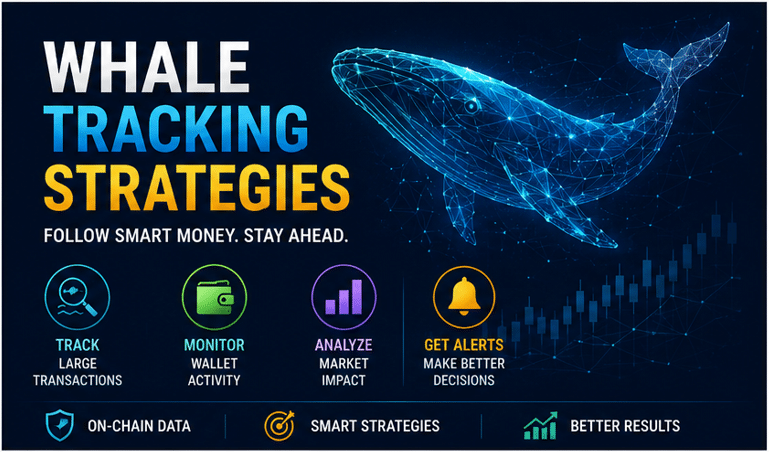
This process is known as whale tracking.
Whale tracking has become an important discipline within blockchain analytics, cryptocurrency trading, compliance investigations, and digital-asset forensics.
However, successful whale tracking requires much more than simply monitoring large transactions.
Understanding context is essential.
WHAT IS A CRYPTOCURRENCY WHALE?
A whale is an entity that controls a significant amount of cryptocurrency.
Whales can include:
- Individual investors
- Hedge funds
- Exchanges
- Investment companies
- Decentralized autonomous organizations (DAOs)
- Mining pools
- Validators
There is no universal definition of a whale.
For example:
Bitcoin:
A wallet holding 1,000 BTC may be considered a whale.
Ethereum:
A wallet holding 10,000 ETH may be considered a whale.
Stablecoins:
A wallet holding $10 million in USDT may attract attention.
The definition often depends on the cryptocurrency being analyzed.
WHY WHALES MATTER
Large asset holders can influence market behavior.
A whale selling thousands of Bitcoin can increase market supply.
A whale accumulating Ethereum may reduce available liquidity.
Because cryptocurrency markets are relatively small compared with traditional foreign-exchange or equity markets, whale activity can have a noticeable impact.
This makes whale tracking an attractive analytical technique.
BLOCKCHAIN TRANSPARENCY
Traditional banking systems restrict transaction visibility.
Blockchain networks operate differently.
Public blockchains provide:
- Wallet addresses
- Transaction amounts
- Timestamps
- Smart-contract interactions
- Token transfers
- Block information
This transparency enables analysts to follow the movement of assets.
TRANSACTION ANALYSIS
Every whale-tracking investigation begins with a transaction.
Analysts examine:
Who sent the assets?
Who received them?
How much was transferred?
When did the transfer occur?
Did the assets move through an exchange?
Did the transaction interact with a smart contract?
Transaction analysis forms the foundation of whale tracking.
WALLET IDENTIFICATION
Identifying important wallets is the next step.
Examples include:
Exchange wallets.
Institutional wallets.
Custodial wallets.
Known whale addresses.
Treasury wallets.
Foundation wallets.
Many exchanges publish wallet addresses publicly.
Blockchain explorers also maintain address labels.
These labels simplify investigations.
WALLET CLUSTERING
Whales rarely use a single wallet.
Large investors often distribute assets across multiple addresses.
Wallet clustering attempts to identify relationships between addresses.
Common techniques include:
Address reuse.
Transaction timing.
Input-output analysis.
Behavioral analysis.
Transaction frequency.
Fund consolidation.
Clustering helps investigators identify broader ownership patterns.
EXCHANGE INFLOWS
One of the most widely monitored indicators is exchange inflow.
Large deposits into exchanges may indicate:
Selling activity.
Profit-taking.
Portfolio rebalancing.
Increased market supply.
Suppose a whale transfers 5,000 BTC into a major exchange.
Analysts may interpret this movement as a potentially bearish signal.
However, assumptions should always be verified.
The transfer may simply represent internal fund management.
EXCHANGE OUTFLOWS
Large withdrawals may suggest:
Long-term accumulation.
Cold-wallet storage.
Reduced market supply.
Institutional custody.
Many analysts consider exchange outflows to be a bullish signal.
Again, context remains critical.
STABLECOIN MOVEMENTS
Stablecoins play an important role in whale tracking.
Large stablecoin transfers may indicate:
Capital deployment.
Liquidity movement.
Exchange preparation.
Over-the-counter transactions.
Monitoring USDT and USDC movements often provides valuable information.
WHALE ALERT SYSTEMS
Several platforms specialize in whale tracking.
These systems monitor blockchain networks continuously.
When transactions exceed predefined thresholds, alerts are generated.
Alerts may include:
Asset type.
Transaction amount.
Sending address.
Receiving address.
Timestamp.
Network.
These notifications allow analysts to react quickly.
BLOCKCHAIN EXPLORERS
Explorers remain indispensable.
Examples include:
Bitcoin:
- Mempool
- Blockstream
Ethereum:
- Etherscan
Tron:
- Tronscan
Solana:
- Solscan
Explorers provide transaction histories and wallet balances.
GRAPH ANALYSIS
Many investigators visualize blockchain activity as a network.
Nodes represent:
Wallets.
Edges represent:
Transactions.
Graph visualization reveals:
Central hubs.
Exchange relationships.
Wallet clusters.
Transaction pathways.
Graph databases such as Neo4j are commonly used.
SMART-CONTRACT ANALYSIS
Modern cryptocurrency ecosystems depend heavily on smart contracts.
Whales interact with:
Liquidity pools.
Lending protocols.
Decentralized exchanges.
Yield-farming platforms.
Staking systems.
Tracking these interactions can reveal important market behavior.
DECENTRALIZED EXCHANGE ANALYSIS
Decentralized exchanges present unique challenges.
Transactions may involve:
Multiple token swaps.
Liquidity provisioning.
Routing through aggregators.
Bridge interactions.
Analysts must understand smart-contract behavior to interpret these transactions accurately.
CROSS-CHAIN MOVEMENTS
Assets frequently move between blockchains.
Examples include:
Ethereum to Tron.
Ethereum to Solana.
Bitcoin to wrapped Bitcoin.
Cross-chain bridges complicate whale tracking.
Maintaining continuity across multiple networks requires specialized tools.
MARKET SENTIMENT
Whale activity contributes to market sentiment.
Analysts often compare:
Whale accumulation.
Exchange balances.
Trading volumes.
Open interest.
Stablecoin reserves.
No single metric provides a complete picture.
TOKEN CONCENTRATION
Token-distribution analysis examines ownership concentration.
Questions include:
How many addresses hold most of the supply?
How many whales control the market?
Is ownership centralized?
Concentrated ownership increases risk.
A few large holders can dramatically affect prices.
FORENSIC APPLICATIONS
Whale tracking extends beyond trading.
Applications include:
Fraud investigations.
Asset recovery.
Cybersecurity investigations.
Compliance monitoring.
Sanctions enforcement.
Blockchain evidence often plays an important role in these investigations.
AUTOMATED MONITORING
Python has become one of the most popular programming languages for blockchain analysis.
Automation can identify:
Large transfers.
Unusual transaction patterns.
Exchange interactions.
Token movements.
Many investigators create automated alert systems.
COMMON MISTAKES
Beginners often make several mistakes.
Mistake 1:
Assuming every large transfer is a buy or sell signal.
Mistake 2:
Ignoring exchange internal transfers.
Mistake 3:
Failing to identify custodial wallets.
Mistake 4:
Overlooking cross-chain activity.
Mistake 5:
Relying on a single data source.
Whale tracking requires verification.
BEST PRACTICES
Always verify addresses.
Use multiple blockchain explorers.
Monitor exchange labels.
Track stablecoin activity.
Document transaction pathways.
Combine blockchain analysis with technical analysis.
Avoid assumptions.
Use historical context.
LIMITATIONS OF WHALE TRACKING
Whale tracking is not perfect.
Challenges include:
Anonymous addresses.
Custodial services.
Internal exchange transfers.
Privacy tools.
Cross-chain bridges.
Coin-mixing services.
These factors can complicate investigations.
ETHICAL CONSIDERATIONS
Blockchain data is public.
However, analysts should avoid making unsupported accusations.
Wallet ownership should not be assumed without evidence.
Objective analysis is essential.
THE FUTURE OF WHALE TRACKING
Artificial intelligence will likely transform blockchain analysis.
Machine learning can identify:
Hidden relationships.
Suspicious activity.
Behavioral patterns.
Risk indicators.
As blockchain ecosystems become more complex, analytical techniques will continue to evolve.
CONCLUSION
Whale tracking combines blockchain transparency with analytical techniques to understand how large cryptocurrency holders influence markets.
By monitoring transactions, clustering wallets, analyzing exchange flows, and interpreting smart-contract interactions, analysts can identify trends that traditional market analysis may overlook.
Whale tracking should not be viewed as a prediction tool.
Instead, it should be considered one component within a broader analytical framework.
The most effective analysts combine on-chain data, technical analysis, fundamental research, and contextual information.
Large transactions leave digital footprints.
The challenge is learning how to follow them.
If you have been impacted by crypto fraud, contact Digital Defenders Group for assistance.
No responses yet